

I-TIP EXTENSIONS
I-Tip Extensions in Salt Lake City
Individual hair extensions attached with small copper and aluminum beads for customized placement, natural movement, and flexible maintenance.
I-tip extensions are installed strand by strand without adhesive or keratin bonding. Each extension is secured with a small bead, giving Heather control over where length, fullness, and density are added throughout the hair.
This method can be a strong option for clients who like the flexibility of individual extensions but prefer a bead-based attachment. Every install begins with a consultation to make sure your natural hair can safely support the method and that the final placement fits the way you style and maintain your hair.
THE BEADED METHOD
Individual Extensions Without Keratin or Adhesive
I-tip extensions offer a very different experience from wefts and tape-ins.
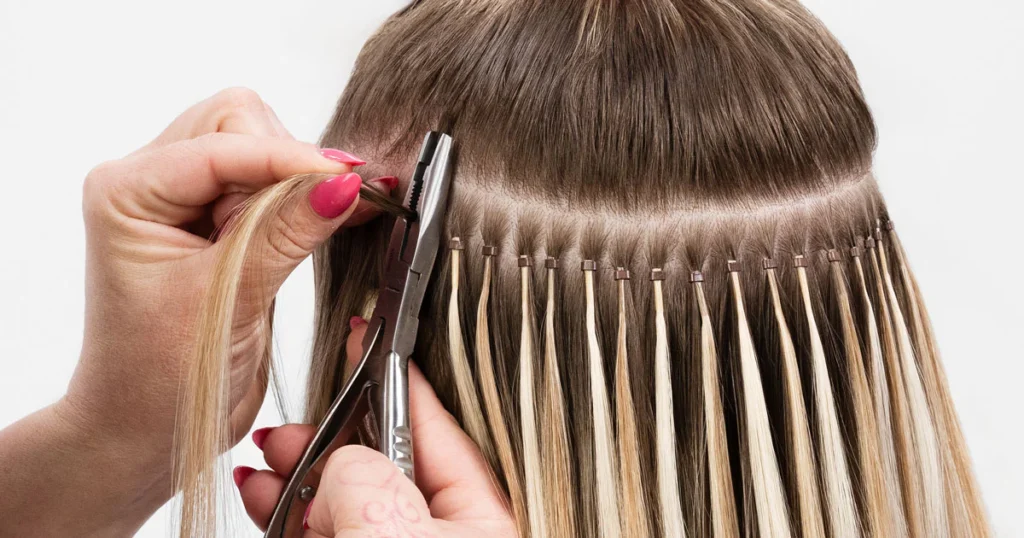
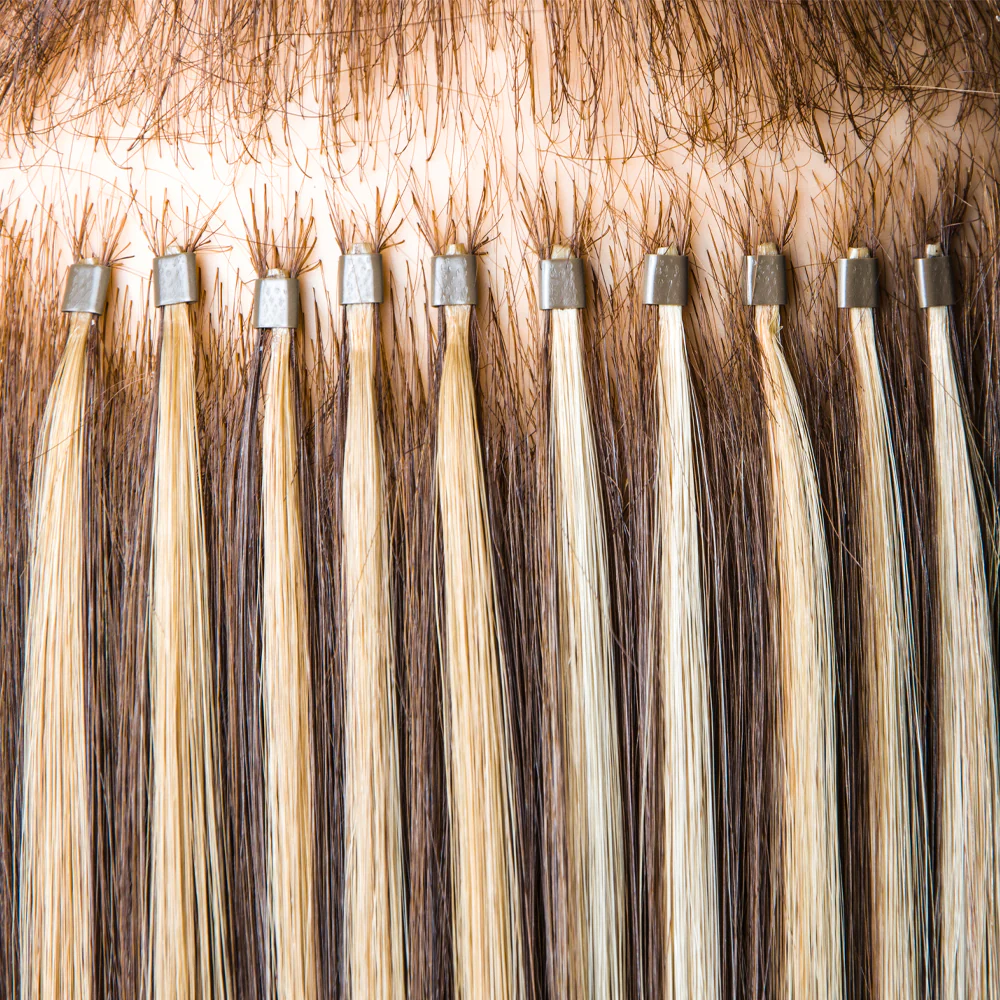
Instead of attaching hair in rows or flat panels, Heather installs individual extension strands throughout the hair using small copper and aluminum beads. The extension strand and a section of natural hair are placed inside the bead, which is then secured to hold the extension in position.
There is no glue involved, and the hair is not bonded with keratin.
That makes I-tips appealing to clients who want individual placement with a mechanical attachment method. Heather can adjust the distribution based on where your hair needs support rather than placing every extension along one fixed row.
The result can feel flexible and natural because each piece moves independently. The final look still depends on thoughtful placement, the correct amount of weight per section, a close color match, and a blending cut that connects the extensions to your natural shape.
I-tips require precision. The beads may be small, but every section must be chosen carefully so the extension feels secure without creating unnecessary tension.
HOW IT WORKS
A Strand-by-Strand Method Secured With Small Beads
Each extension is placed individually, allowing the install to follow the natural density and movement of your hair.
Individual Strand Placement
Heather separates small sections of natural hair and pairs them with individual I-tip extension strands. The placement is mapped according to your density, length, parting, and desired result.
Copper and Aluminum Bead Attachment
The natural hair and extension strand are threaded through a small bead made with copper and aluminum. The bead is secured in place without using adhesive or a keratin bond.
Custom Distribution and Blending
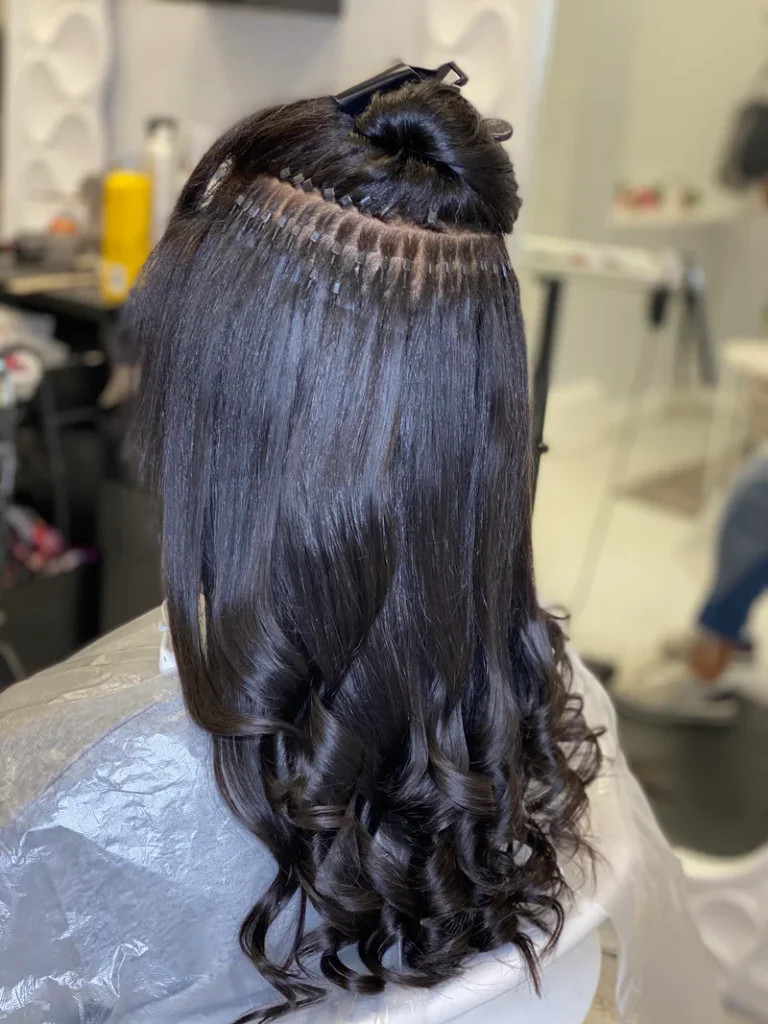
The extensions are spread throughout the appropriate areas rather than attached in one continuous row. Once installed, Heather cuts and blends the added hair into your natural style.
WHY CLIENTS CHOOSE I-TIPS
Flexible Placement With a Bead-Based Attachment
I-tip extensions are often chosen by clients who want the movement and customization of an individual method but do not want keratin bonds.
Because each strand is attached separately, Heather can concentrate fullness where it is needed, soften areas that feel sparse, or build length without relying on a larger weft or adhesive panel.
That individual placement can be especially useful when the hair does not have the same density everywhere. One area may need more support than another. A row-based method may be too broad for that kind of adjustment, while I-tips allow the install to be built piece by piece.
The beads also make the method maintainable through move-up appointments. As the natural hair grows, the bead can be opened, repositioned closer to the scalp, and secured again when the extension hair remains in good condition.
No Keratin Bond
I-tips use a small bead rather than a keratin compound, making them a distinct option from K-tip extensions.
No Adhesive Panels
There are no tape tabs or broad adhesive sections. Each extension is attached individually.
Targeted Fullness
Heather can add strands in specific areas to create a more balanced shape and support uneven density.
Move-Up Maintenance
The bead-based attachment allows qualifying extensions to be repositioned as the natural hair grows.
IS THIS YOUR METHOD?
Are I-Tip Extensions a Good Fit for You?
I-tip extensions may be a good choice if you want strand-by-strand placement, prefer a bead attachment, and are comfortable with regular maintenance appointments.
This method offers more distribution flexibility than a row-based install, but it still requires natural hair with enough strength and density to support each bead. The weight of every extension needs to be matched to the section holding it.
Your styling habits also matter.
I-tips can provide flexible movement, but the beads must be placed carefully around your part, hairline, and common hairstyles. If your hair is extremely fine, fragile, or prone to breakage, another method may be more appropriate.
Heather will look at your natural density, scalp sensitivity, color, hair history, and extension goals before deciding whether I-tips make sense.
- Clients who prefer a bead-based attachment
- Strand-by-strand extension placement
- Customized density in specific areas
- Clients avoiding keratin bonds or adhesive tabs
- Natural movement and flexible distribution
- Clients willing to return for move-up appointments
- Very fragile or low-density hair
- Clients sensitive to small bead attachments
- Anyone wanting the fastest installation
- Clients unwilling to maintain separation around the beads
- Anyone wanting a completely maintenance-free extension method
Choosing Between I-Tips and K-Tips?
Both methods use individual extension strands, but the attachment is different.
I-tips are secured with small beads. K-tips use a keratin compound. Heather can compare the comfort, maintenance, placement, and finished movement of each method during your consultation.
REAL-LIFE FLEXIBILITY
Individual Placement That Works With Your Hair
One of the strongest benefits of I-tip extensions is that the install does not have to follow one broad pattern across the head.
Heather can adjust the placement based on how your hair grows, where your natural density changes, and how you typically style it. A client who needs fullness near the sides may not need the same number of extensions through the back. Someone adding length may need the strands distributed differently than someone focused mainly on volume.
That flexibility helps the finished hair feel more balanced.
It also means the install can be designed around your parting and common hairstyles. Although every extension method has some styling considerations, individual strands can allow the hair to separate and move without the fixed structure of a row.
The goal is not to add as many extensions as possible. It is to use the right number of strands in the right places so the finished hair looks complete without feeling overloaded.
WHAT I-TIPS CAN DO
Results Built One Extension at a Time
I-tips can be used for subtle density, added length, or a more complete transformation depending on your starting hair.
Add Fullness Through the Sides
Individual placement can help support areas that appear thinner or less dense than the rest of the hair.
Build Length Gradually
I-tips can extend the overall length while allowing the density to be distributed in a controlled way.
Support Uneven Density
If one area needs more hair than another, the number and spacing of individual strands can be adjusted.
Create Natural Separation
Because the extensions are not connected in rows, each strand can move independently with the surrounding hair.
The final result depends on more than the attachment method. Heather also considers the extension color, texture, length, quantity, and blending cut so the added hair feels connected to your natural style.
MAINTENANCE
How to Care for I-Tip Extensions
I-tip extensions need regular attention at home and professional move-up appointments as the natural hair grows.
The beads should remain separated and free from tangling. Hair that sheds naturally can collect near the attachment points over time, so gentle separation is an important part of daily or weekly care.
Heather will show you how to brush around the beads, where to apply products, and how to protect the hair overnight.
Separate the Beads Regularly
Use your fingers to gently check the attachment area and keep neighboring beads from tangling together as your hair grows.
Brush Above and Below the Attachments
Support the hair near the beads while brushing. Work through the ends first and avoid aggressive pulling at the root.
Keep Heavy Products Off the Beads
Apply oils and conditioners through the mid-lengths and ends rather than directly on the attachment points.
Return for Move-Ups on Time
As the beads move away from the scalp with natural growth, Heather repositions them to maintain comfort, control, and proper weight distribution.
Will I-Tip Extensions Damage My Hair?
I-tip extensions should not automatically damage healthy hair, but the method must be installed and maintained correctly.
Each bead holds an individual section of natural hair. If the extension strand is too heavy, the section is too small, or the bead is positioned poorly, the attachment can place unnecessary stress on the hair.
That is why density and section size matter so much.
Heather evaluates whether your hair is strong enough to support the attachments before recommending I-tips. She also adjusts the number of strands based on what your natural hair can safely hold rather than simply working toward the fullest possible result.
At-home care and maintenance appointments are equally important. Tangling around the beads, aggressive brushing, skipped move-ups, and improper removal can all increase the risk of breakage.
Professional installation, timely maintenance, and controlled removal help protect the natural hair throughout the wear cycle.
SALT LAKE CITY EXTENSIONS
I-Tip Extensions in Salt Lake City
If you are searching for I-tip extensions in Salt Lake City, you may be looking for an individual extension method that does not use keratin bonds or adhesive panels.
Heather offers I-tip extensions for clients who want customized strand placement with a copper and aluminum bead attachment. From the first consultation through move-up maintenance, every part of the service is planned around your natural density, desired result, and hair health.
Beauty by Heather Jean is located at 780 S 500 E, Salt Lake City, UT 84102 and serves clients from Central Salt Lake City, Sugar House, Millcreek, The Avenues, Holladay, and nearby communities.
Whether you already know you want I-tips or are comparing them with K-tips and wefts, Heather will help you understand how the methods differ before you choose.
METHOD COMPARISON
I-Tips Compared With K-Tips, Wefts, and Tape-Ins
The attachment method changes the way each extension system is installed, maintained, and worn.
I-Tip Extensions
Individual strands secured with small copper and aluminum beads. Best for clients who want bead-based attachment, targeted placement, and move-up maintenance.
K-Tip Extensions
Individual strands attached with a keratin compound. Best for discreet bonds, natural movement, and detailed strand-by-strand customization.
Weft Extensions
Hair installed in rows. Best for clients wanting structured fullness, density, and a larger transformation.
Tape-In Extensions
Flat extension panels attached with adhesive tabs. They can work for certain hair types, though Heather generally prioritizes other methods when they offer a better fit.
I-Tip Extensions FAQ
I-tips are commonly described as a type of micro-bead extension because individual extension strands are secured with small beads. Terminology can vary, so the most important detail is understanding the specific hair and attachment system being used.
No adhesive or keratin bonding compound is used. The extension strand is secured to the natural hair using a small copper and aluminum bead.
The timing depends on your natural growth, maintenance habits, and how the attachments are wearing. Heather will give you a recommended schedule after installation.
It often can be reused through move-up appointments when the extension hair remains in good condition. Heather evaluates the hair during each maintenance visit.
Individual placement can provide styling flexibility, but the beads still need to be considered. Heather plans the placement around your common parting and hairstyles to help keep the attachments discreet.
Neither method is universally better. I-tips use beads and can be moved up, while K-tips use keratin bonds and may provide a different feel and attachment profile. The right choice depends on your hair and preferences.
Find Out Whether I-Tips Fit Your Hair
I-tip extensions offer individual placement, flexible distribution, and bead-based maintenance without keratin or adhesive. Book a consultation with Heather to compare I-tips with K-tips, wefts, and tape-ins and create an extension plan that fits your natural hair.